Integrated Fixed-Film Activated Sludge Treatment
Produces effluent that meets all environmental discharge requirements both in terms of BOD and total nitrogen requirements.
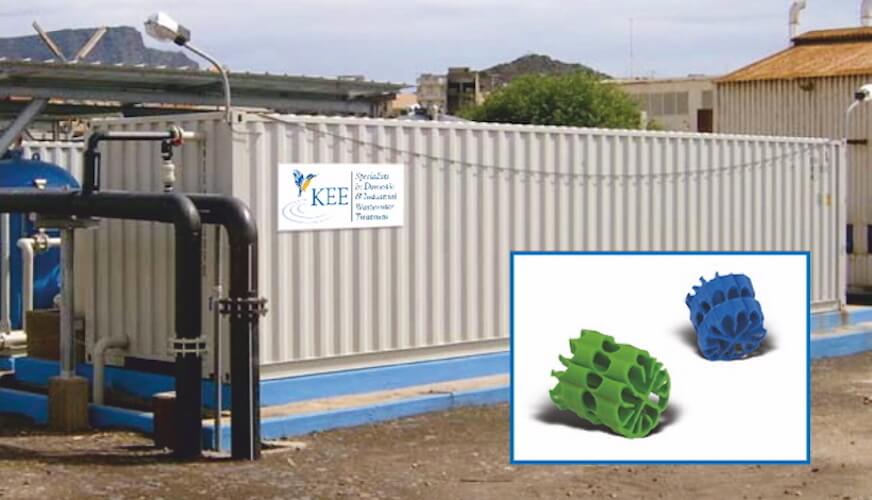
Integrated Fixed-Film Activated Sludge (IFAS) technology upgrades conventional activated sludge treatment by introducing biomass carrier media directly into aeration basins. By combining suspended growth with fixed-film bioreactors, IFAS significantly increases biological sludge treatment capacity, enhances biological nutrient removal (BOD and total nitrogen), and improves process stability, all within your existing plant footprint.
Optimising Activated Sludge Treatment Without Expanding Footprint
As discharge limits tighten and hydraulic loads increase, industrial and municipal wastewater facilities face growing pressure to expand capacity. Integrated Fixed-Film Activated Sludge (IFAS) technology from KEE Process offers a modern solution to upgrade traditional biological activated sludge treatment systems without committing to costly, space-intensive plant expansions.
By seamlessly integrating fixed-film carriers into an existing aeration basin, IFAS creates a hybrid biological reactor. This configuration allows two distinct microbial communities to coexist: freely suspended microorganisms in the liquor and attached biological growth on high-surface-area carriers. The result is a robust, high-density sludge treatment process engineered to meet strict environmental compliance standards.
How IFAS Enhances Sludge Treatment Dynamics
Conventional biological treatment relies solely on suspended biomass, where sludge age (Solids Retention Time or SRT) is limited by settlement tank performance and hydraulic retention times.
IFAS overcomes these constraints by providing an attached surface for slow-growing, specialised microorganisms, such as nitrifying bacteria, to establish a resilient biofilm.
Comparing Wastewater Treatment Biological Systems
| Process Feature | Conventional Activated Sludge | Pure Fixed-Film (RBC / Trickling Filter) | KEE Integrated Fixed-Film Activated Sludge (IFAS) |
|---|---|---|---|
| Microbial Mechanism | Suspended Growth | Attached Growth | Hybrid (Suspended + Attached) |
| Biomass Density | Medium (limited by clarifier capacity) | High (restricted to surface area) | Maximum (Combined volumetric density) |
| Footprint Requirement | Large | Medium | Minimal (Utilises existing tanks) |
| Nitrification Stability | Variable under hydraulic surge | Good | Exceptional (Protected biofilm SRT) |
| Retrofit Viability | Baseline | Low | Optimal retrofit solution |
Engineer-Led Solutions from KEE Process
Whether upgrading an ageing municipal facility or optimising an overloaded industrial treatment works, KEE Process delivers end-to-end engineering support, from initial site audit and process design through to installation, commissioning, and ongoing maintenance.
Ready to optimise your activated sludge treatment process?
Contact our technical engineering team to discuss custom IFAS retrofits and packaged wastewater solutions.