Dispersed Air Flotation Systems: Efficient Wastewater Pre-Treatment
The KEE dispersed air floatation system is specifically designed for physical/chemical pre-treatment of wastewater.
KEE Services designs, installs, and maintains Dispersed Air Flotation systems engineered to lower pollutant loads, optimise energy usage, and guarantee discharge compliance.
Key Takeaways: KEE Dispersed Air Flotation
- Mechanical Simplicity: Operates at atmospheric pressure using impellers or fine diffusers, eliminating the need for expensive high-pressure recycle vessels.
- Energy Efficient: Lower operational power requirements compared to traditional high-pressure saturation systems.
- High Load Capacity: Robust performance when treating variable wastewater flows, heavy sludges, and high levels of Fats, Oils, and Grease (FOG).
- Turnkey Engineering: Full lifecycle support from bespoke plant design and installation to 24/7 emergency response and routine maintenance.
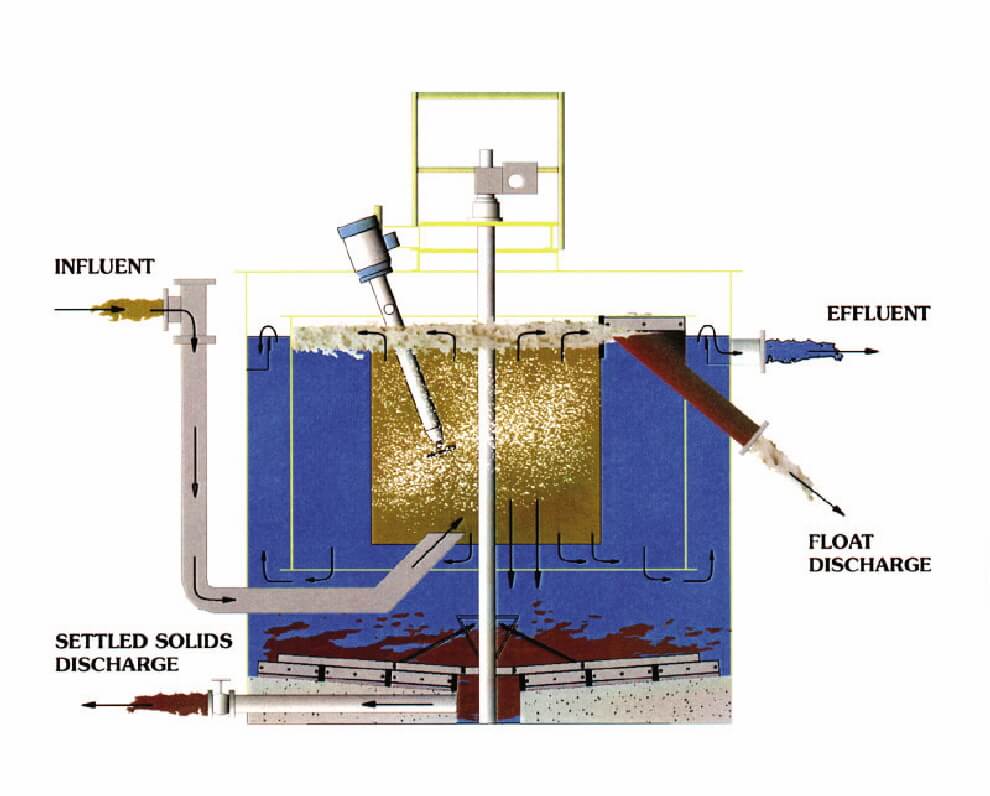
What is a Dispersed Air Flotation System?
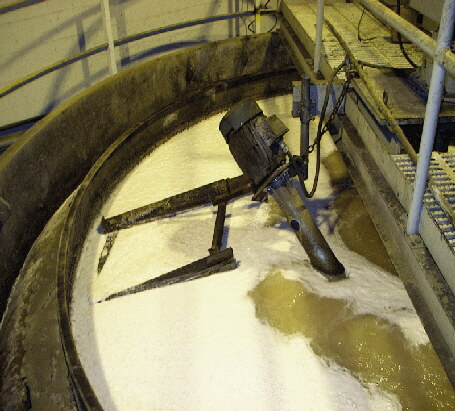
A Dispersed Air Flotation system is a physical and chemical wastewater pre-treatment process used to remove total suspended solids (TSS), fats, oils, and grease (FOG) from effluent streams.
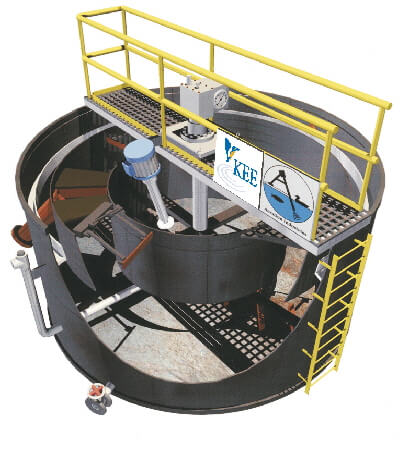
Unlike pressure-reliant flotation systems, dispersed flotation works mechanically. Air is introduced directly into the wastewater stream at atmospheric pressure using mechanical impellers or diffusers. As these bubbles pass through the liquid, they adhere to suspended contaminants, carrying them to the tank surface where an automated skimming mechanism removes the resulting sludge layer.
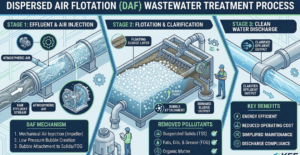
Dispersed Air Flotation vs. Dissolved Air Flotation (DAF)
Understanding the distinction between Dispersed Air Flotation and Dissolved Air Flotation (DAF) helps ensure the correct process selection for your facility:
| Feature | Dispersed Air Flotation | Dissolved Air Flotation (DAF) |
|---|---|---|
| Air Injection Method | Atmospheric injection via impellers or diffusers. | High-pressure dissolution (4–6 bar) in a recycle stream. |
| Bubble Size | Larger bubble structure. | Microbubbles (30–100 microns). |
| Mechanical Complexity | Low (no pressure vessels or saturator tanks). | Moderate to High (requires recycle pumps & pressure tanks). |
| Energy Consumption | Low operational energy demand. | Higher energy requirements. |
| Best Application | High solids loading, heavy oils, robust pre-treatment. | Extremely fine particle removal and final polishing. |
Benefits of KEE Dispersed Air Flotation Systems
- Reduced Capital & Operating Costs: Eliminating pressure vessels and specialised compressor hardware significantly lowers initial investment and running expenses.
- Simplified Maintenance: Fewer moving parts under pressure means less wear and tear, reducing servicing requirements and plant downtime.
- Protected Downstream Assets: Pre-treating aggressive effluent streams reduces load on secondary biological processes and membrane systems.
- Regulatory Compliance: Consistently lowers Trade Effluent parameters (COD, BOD, TSS) to safeguard against utility surcharges and non-compliance penalties.
Industry Applications
KEE Dispersed Air Flotation systems are deployed across municipal and industrial sectors:
- Food & Beverage Processing: Rapid removal of fats, oils, and organic matter from washdown water.
- Dairies & Creameries: Managing high organic loads, milk fats, and suspended solids.
- Breweries & Distilleries: Separating spent grain residues, yeast, and organic particulate.
- Municipal Wastewater Treatment: Primary treatment for managing heavy scum loads and primary sludge thickening.
Full Lifecycle Engineering Services by KEE
At KEE Services, our wastewater engineers bring decades of expertise to every stage of your flotation project:
- Custom System Design: Tailored sizing and configuration based on flow rates, chemical demand, and effluent profiles.
- Turnkey Installation: Seamless integration into new plant builds or retrofits into existing site infrastructure.
- Servicing & Optimisation: Scheduled preventive maintenance, mechanical overhauls, and process optimisation.
- 24/7 Emergency Support: Dedicated technical call-out teams across the UK to protect site continuity.
Frequently Asked Questions
Why choose Dispersed Air Flotation over DAF?
Dispersed Air Flotation is typically chosen for its mechanical simplicity, lower energy consumption, and lower capital cost. It is ideal for applications with high solids loading where microscopic microbubbles are not required to achieve discharge targets.
Does Dispersed Air Flotation require chemical dosing?
While dispersed systems can operate effectively on physical separation alone, adding coagulants or flocculants often enhances particle aggregation, increasing total solids recovery.
How do I book a service for an existing flotation unit?
You can book a system inspection, routine maintenance service, or performance audit directly through KEE Services. Contact our engineering team today to ensure your treatment system remains compliant and energy-efficient.