
Primary and Final Settlement Tanks
Precision Engineering for Superior Solids Separation
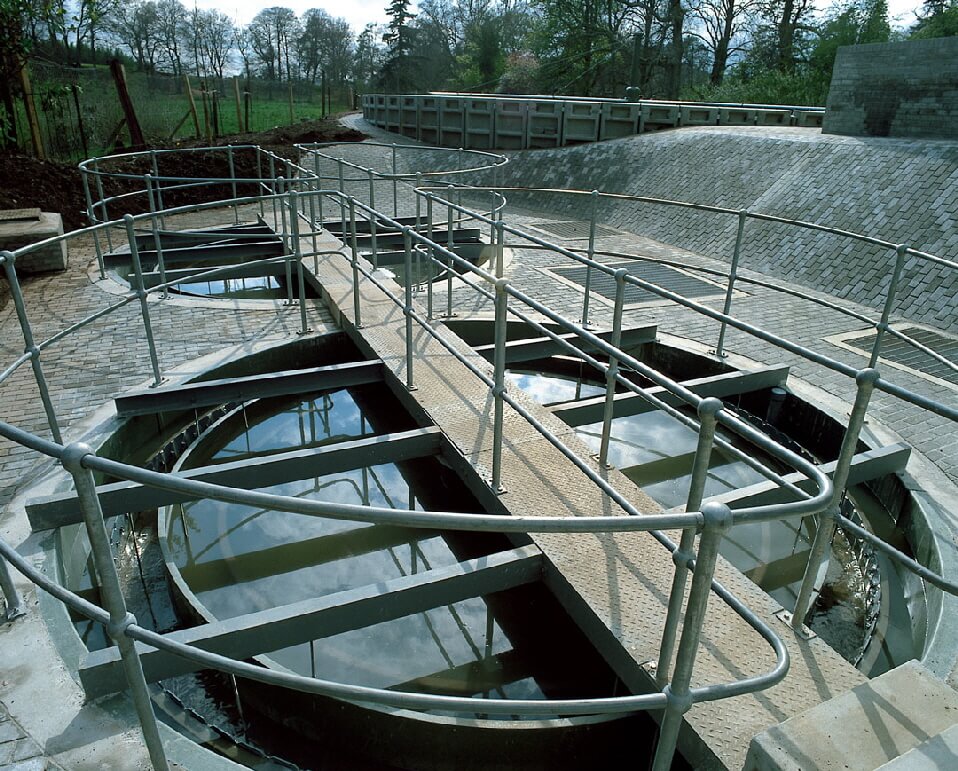
Effective wastewater management begins and ends with efficient settlement. KEE provides a range of advanced-design Primary Settlement Tanks (PST) and Final Settlement Tanks (FST), engineered to provide the optimal hydraulic conditions required for effective solids separation.
Constructed from high-quality Glass Reinforced Polyester (GRP), our tanks are lightweight, corrosion-resistant, and built for a 30-year design life. Whether you are upgrading an existing facility or installing a new system, KEE settlement tanks ensure your process remains compliant and your downstream components are protected.
The Role of Settlement Tanks in the Treatment Cycle
A settlement tank (also known as a clarifier) is fundamental to the stability of any wastewater treatment plant. By utilising gravity to separate settleable solids from the liquid, these tanks reduce the biological load on secondary processes and ensure the final effluent meets stringent environmental standards.
Primary Settlement Tanks (PST): Protecting Your Process
The Primary Settlement Tank is the first stage of physical treatment. It is designed to capture grit, heavy organic solids, and “scum” before the wastewater reaches the biological stage (such as an RBC or SAF unit).
- Efficiency: Effectively removes up to 70% of suspended solids and 30% of BOD (Biochemical Oxygen Demand).
- Component Protection: By removing heavy solids early, PSTs prevent blockages and excessive wear on downstream pumps and biological media.
Final Settlement Tanks (FST): Ensuring Effluent Clarity
Following biological treatment, the Final Settlement Tank performs the critical task of “polishing” the water. It separates the treated effluent from the biological “floc” or biomass generated during the aeration process.
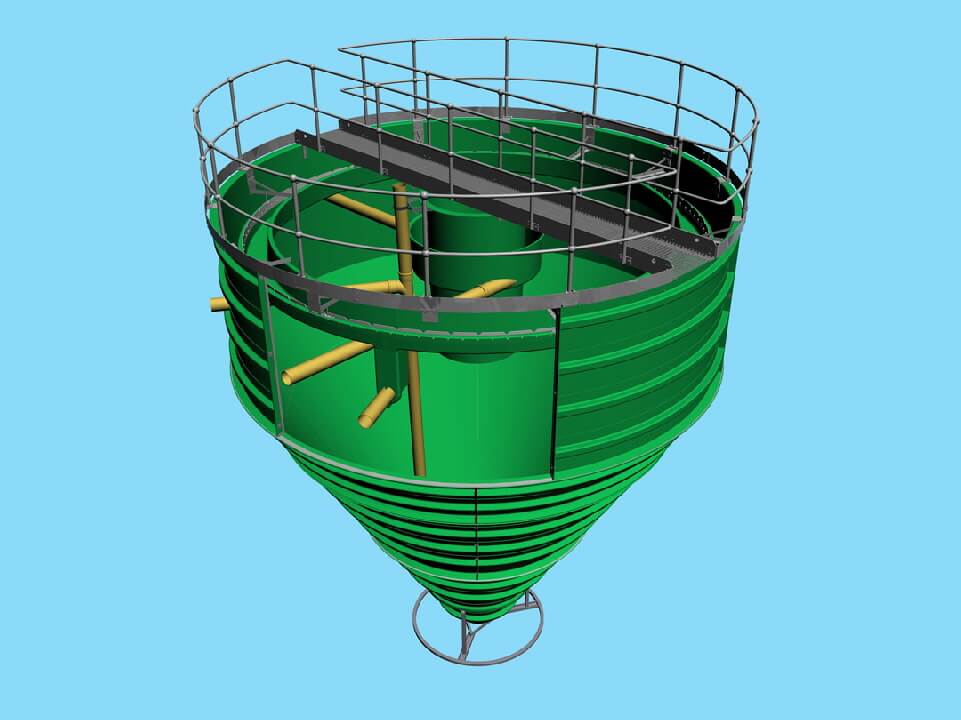
- Sludge Management: Our FSTs feature a precision-engineered hopper bottom, allowing settled humus sludge to be easily returned to the primary stage or removed, maintaining the health of the entire system.
- Compliance: Designed to produce a clear, high-quality effluent that meets or exceeds Environment Agency (EA) discharge consents.
Why Choose KEE Settlement Solutions?
With over 70 years of engineering heritage, KEE understands the complexities of hydraulic design. Our tanks are not just containers; they are precision instruments.
- Ease of Installation: The lightweight nature of GRP enables faster on-site assembly and lower crane costs compared to traditional concrete tanks.
- Environmental Resilience: Fully resistant to hydrogen sulfide and other corrosive gases common in raw sewage.
- Nationwide Support: From initial hydraulic sizing to professional commissioning and maintenance, our British Water-accredited engineers are with you for the life of your plant.
FAQs
What is the difference between a primary settlement tank and a secondary settlement tank?
The primary settlement tank and secondary settlement tank serve different stages and functions in the wastewater treatment process, targeting specific materials for removal.
| Feature | Primary Settlement Tank (PST) | Secondary Settlement Tank (SST) |
|---|---|---|
| Stage in Process | Follows preliminary treatment (screens/grit removal). | Follows the biological treatment stage (e.g., Activated Sludge). |
| Primary Purpose | To physically remove coarse, settleable solids (raw sewage solids) from the incoming wastewater. | To separate the biological sludge (flocculated microbial biomass) from the treated water. |
| Output Sludge Use | Sludge is sent to further sludge treatment (e.g., anaerobic digestion). | Sludge is mostly returned to the biological reactor to maintain the cleaning process. |
| Removal Efficiency | Removes about 60% of suspended solids and 30-40% of Biological Oxygen Demand (BOD). | Removes fine, non-settling particles and the biological floc remaining after aeration. |
Is a septic tank a settling tank?
A septic tank serves as a settlement tank, specifically functioning as a single-stage primary treatment unit. It is a watertight container designed to hold wastewater for a sufficient period, allowing solids to settle at the bottom and form sludge, while lighter materials, such as grease and oils, float to the top, creating scum.
The liquid effluent then exits the tank for further dispersal or treatment. Unlike a treatment plant, which uses multiple designated primary settlement tanks to handle high flow volumes, a septic tank performs the same basic physical separation process for a single household or facility.
What is a GRP tank?
GRP stands for Glass-Reinforced Plastic (or Glass-Reinforced Polymer). A GRP tank is a container made from a composite material that consists of plastic resin reinforced with fine glass fibres (fibreglass).
GRP tanks are commonly used in wastewater treatment for various applications, including pump stations, emergency storage, and settlement tanks. They offer several key advantages:
- Corrosion Resistance: GRP tanks are highly resistant to chemicals and corrosive environments common in sewage and wastewater.
- Lightweight: These tanks are easier to transport and install compared to traditional concrete or steel tanks.
- Durability: GRP tanks provide excellent structural strength and offer a long service life with minimal maintenance.