Best Energy-Efficient Wastewater Treatment Systems for Small UK Businesses
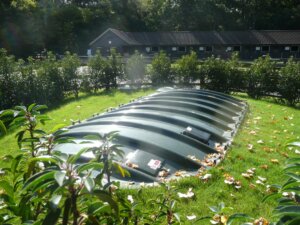
Operating off-grid or in rural settings presents a unique challenge for small UK businesses: managing wastewater effectively while keeping operational costs and energy consumption to a minimum. Whether running a boutique hotel, a holiday park, a farm shop, or a rural office complex, finding the best sewage treatment plant is critical.
Rising energy bills paired with strict Environment Agency General Binding Rules make off-mains business wastewater treatment a key operational focus. Choosing an inefficient treatment system risks higher electricity costs, maintenance expenses, and non-compliance fines.
This guide breaks down energy-efficient small sewage treatment options, key technology choices, running costs, and maintenance strategies to help lower overheads while safeguarding the local environment.
Which Small Business Wastewater System is Most Energy Efficient?
The most energy-efficient mechanical solution for small-to-medium UK commercial sites is a Rotating Biological Contactor (RBC), such as the KEE NuDisc® system.
Unlike continuous submerged aeration systems that rely on high-wattage blowers running 24/7, an RBC uses a low-power motor to slowly rotate a series of packed media discs. The biological film on the discs is alternately exposed to wastewater and atmospheric oxygen, providing natural aeration with minimal electrical demand.
Comparing Wastewater Treatment Technologies by Energy Consumption
Choosing the right small sewage treatment system requires balancing initial investment, footprint, and ongoing electricity requirements.
| Treatment Technology | Energy Consumption | Operational Profile | Best Suited For |
|---|---|---|---|
| Rotating Biological Contactor (RBC) (e.g., KEE NuDisc®) | Very Low (Fractional kW drive motor) | Extremely quiet, handles fluctuating commercial loads smoothly, and provides a highly stable process. | Commercial sites, pubs, hotels, and holiday parks. |
| Submerged Aerated Filter (SAF) (e.g., KEE NuFlow) | Moderate (Continuous air blower output) | Compact design, robust performance under variable organic loads. | Constrained commercial footprints and industrial sites. |
| Extended Aeration / Activated Sludge | High (Continuous high-power aeration) | Intense biological process requiring regular monitoring and desludging. | Larger industrial operations with high-strength effluent. |
What Factors Impact Sewage Treatment Cost for UK Commercial Sites?
Calculating the long-term sewage treatment cost for a small business involves looking beyond the initial capital expenditure. High energy bills and frequent tankering visits can quickly negate a low purchase price.
Key cost drivers include:
- Energy Demand (kWh): Systems operating continuous blowers run 24 hours a day, 365 days a year. Low-power motor technologies like RBCs dramatically reduce operational power draw.
- Desludging Frequency: Advanced biological systems optimise sludge stabilisation, reducing the need for tankering and lowering routine waste-removal costs.
- Flow Management: Managed flow technology prevents shock loading (sudden rushes of water from commercial kitchens or event spaces) from unsettling the biological balance.
- Compliance Assurance: Meeting stringent Environment Agency discharge standards avoids costly enforcement action or site operational pauses.
How to Optimise Energy Efficiency & Lifetime System Performance
Installing an energy-efficient plant is only the first step. To maintain low running costs over a 25+ year design life, small businesses should implement three core practices:
1. Match Plant Sizing to Seasonal Loads
Commercial sites like glamping spots, wedding venues, and seasonal attractions experience fluctuating daily flows. Modular packaged units let processing capacity scale up or down without wasting energy running underutilised machinery.
2. Implement Managed Flow Controls
Surge flows can flush active microorganisms out of the treatment chamber, causing process failures. Integrated flow control regulates incoming wastewater, ensuring consistent treatment without drawing extra power.
3. Schedule Professional Servicing
Accumulated solids, worn drive belts, or clogged diffusers force pumps and blowers to work harder, consuming significantly more power. Specialist water treatment services restore peak mechanical efficiency and catch minor issues before they lead to expensive breakdowns.
Expert Water Treatment Services from KEE Services
At KEE Services, we bring over 70 years of hands-on experience in designing, manufacturing, installing, and servicing off-mains wastewater treatment systems across the UK. With over 350,000 installations worldwide, our team provides tailored solutions that lower lifetime running costs while maintaining full regulatory compliance.
Our nationwide network of certified engineers delivers comprehensive support for all wastewater assets:
- Custom Engineering: Bespoke design and installation for single-piece or modular commercial plants.
- All-Makes Servicing: Routine maintenance and 24/7 emergency support for KEE equipment as well as third-party systems (including Klargester, Conder, Titan, and more).
- Plant Refurbishment & Upgrades: Retrofitting modern, low-energy internals into existing tank casings to eliminate costly civil works.
- Full Operational Management: End-to-end plant management for total peace of mind.
Frequently Asked Questions
What is the most energy-efficient small sewage treatment plant for a business?
Rotating Biological Contactor (RBC) plants are widely recognised as the most energy-efficient packaged treatment units. Because aeration is achieved via slow physical rotation rather than continuous forced air, power consumption remains extremely low.
How much electricity does a commercial sewage treatment plant use?
Electricity usage depends on the technology type and population equivalent (PE) rating. A small RBC plant treating up to 50 PE may run on a low-power motor, consuming a fraction of the electricity required by continuous aeration plants and saving hundreds of pounds annually on energy bills.
Does KEE maintain non-KEE wastewater treatment plants?
Yes. KEE Services engineers are trained to service, repair, and upgrade all major wastewater treatment plant makes and models across the UK, keeping your infrastructure compliant regardless of the original manufacturer.