Primary and Final Settlement Tanks
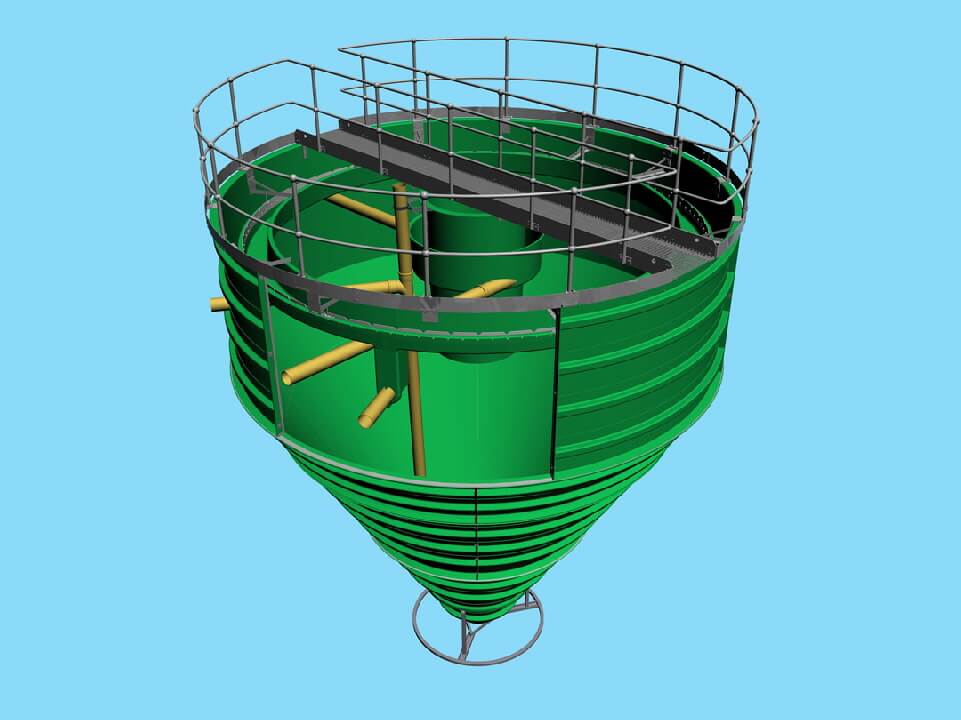
A new range of advanced design hopper bottom GRP settlement tanks for small wastewater treatment plants.
Ensure efficient, compliant solids separation and sludge handling with KEE Process’s range of advanced hopper bottom settlement tanks.
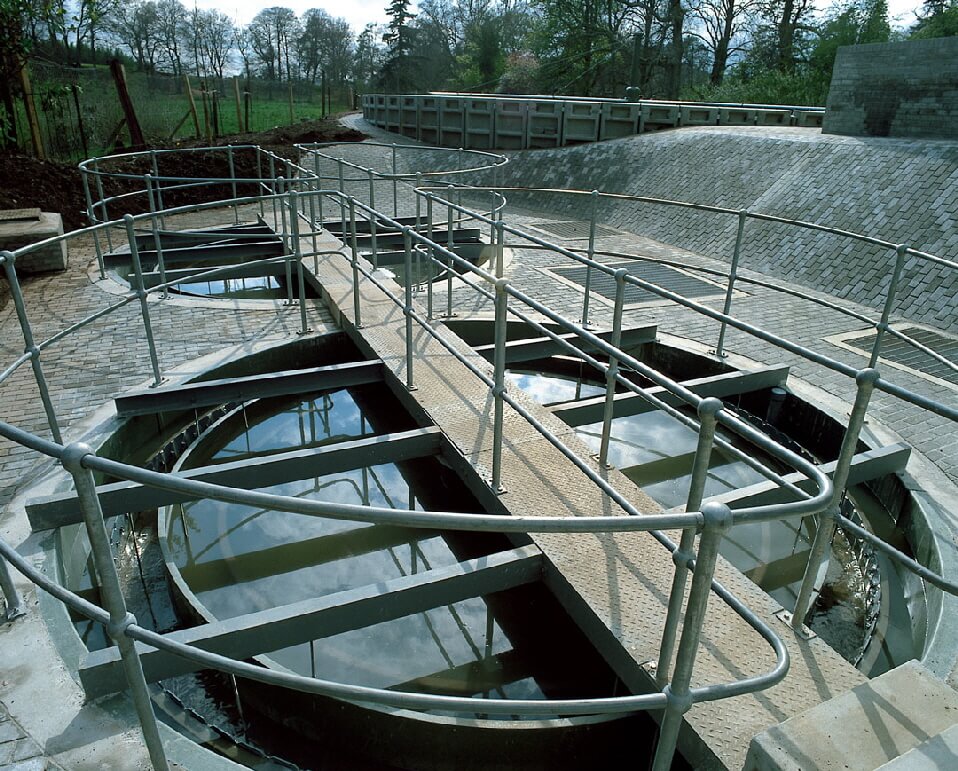
Suitable for both primary and final treatment stages, our GRP tanks are designed for rapid installation, watertight jointing, and superior flow distribution, optimising wastewater treatment performance for small and medium-sized plants.
Primary and Final Settlement Tank Maintenance
To maintain efficiency, compliance standards, and long operational life, KEE Services provides comprehensive servicing and maintenance for all primary and final settlement tanks, including those supplied by other manufacturers.
Settlement Tank Features
Advanced GRP Construction
High-performance jointing provides watertight seals between components, reducing assembly time and costs.
Peripheral Launder with Adjustable V-Notch Weirs
A newly engineered launder features a sloping floor for complete drainage and adjustable 90° V-notch weirs for balanced, consistent flow distribution across the entire tank.
Customisable Dimensions
Standard tanks offer a minimum 1m water depth, with optional deeper cylindrical sections and diffusion drum diameters of 1000mm or 1200mm. Scum troughs available to suit site-specific needs.
Safer, Flexible Installation
On-site phased assembly eliminates the need for confined space entry, improving construction safety.
Modular Scalability
Larger flow rates are managed through multiple unit installations.
KEE Fixed-Price Maintenance Contracts
Protect long-term asset performance with scheduled servicing, emergency call-outs, and operational support.
Book your settlement tank service online or contact us to enquire about our fixed-price operation and maintenance contracts today.
FAQs
What is the difference between a primary settling tank and a secondary settling tank?
The primary settlement tank and secondary settlement tank serve different stages and functions in the wastewater treatment process, targeting specific materials for removal.
| Feature | Primary Settlement Tank (PST) | Secondary Settlement Tank (SST) |
|---|---|---|
| Stage in Process | Follows preliminary treatment (screens/grit removal). | Follows the biological treatment stage (e.g., Activated Sludge). |
| Primary Purpose | To physically remove coarse, settleable solids (raw sewage solids) from the incoming wastewater. | To separate the biological sludge (flocculated microbial biomass) from the treated water. |
| Output Sludge Use | Sludge is sent to further sludge treatment (e.g., anaerobic digestion). | Sludge is mostly returned to the biological reactor to maintain the cleaning process. |
| Removal Efficiency | Removes about 60% of suspended solids and 30-40% of Biological Oxygen Demand (BOD). | Removes fine, non-settling particles and the biological floc remaining after aeration. |
Is a septic tank a settling tank?
A septic tank serves as a settlement tank, specifically functioning as a single-stage primary treatment unit. It is a watertight container designed to hold wastewater for a sufficient period, allowing solids to settle at the bottom and form sludge, while lighter materials, such as grease and oils, float to the top, creating scum.
The liquid effluent then exits the tank for further dispersal or treatment. Unlike a treatment plant, which uses multiple designated primary settlement tanks to handle high flow volumes, a septic tank performs the same basic physical separation process for a single household or facility.
What is a GRP tank?
GRP stands for Glass-Reinforced Plastic (or Glass-Reinforced Polymer). A GRP tank is a container made from a composite material that consists of plastic resin reinforced with fine glass fibres (fibreglass).
GRP tanks are commonly used in wastewater treatment for various applications, including pump stations, emergency storage, and settlement tanks. They offer several key advantages:
- Corrosion Resistance: GRP tanks are highly resistant to chemicals and corrosive environments common in sewage and wastewater.
- Lightweight: These tanks are easier to transport and install compared to traditional concrete or steel tanks.
Durability: GRP tanks provide excellent structural strength and offer a long service life with minimal maintenance.