How Does a Wastewater Treatment Plant Work

When it comes to wastewater, you likely don’t often give it a second thought. However, the reality is that you shower, turn on your taps, and wash your clothing, and all that waste has to go somewhere.
So, if you’re curious about what happens once we’ve flushed the loo, KEE Services has all the answers for you in this handy guide.
Wastewater treatment plants are essential systems that safely clean and treat sewage before it’s released back into the environment or reused. Whether you live in a rural property with a small on-site system or a large municipal plant serving entire towns, the aim is the same: to remove harmful solids, pollutants, nutrients, and pathogens from wastewater to protect public health and the environment.
In this guide, we’ll explain how a typical wastewater treatment plant works, breaking down each stage of the process in clear, understandable terms. We’ll also explore the role of packaged treatment systems, such as KEE Services’ NuDisc® and RBC plants, and why regular maintenance is crucial to staying compliant and protecting your waste investment.
What is a Wastewater Treatment Plant?
In simple terms, a wastewater treatment plant is a facility designed to recycle and clean used water and sewage. Allowing it to be safely discharged back into the environment for reuse.
Wastewater plants work to remove harmful contaminants, such as solids, organic matter, bacteria, and other nutrients, from household, commercial, and industrial wastewater.
Common Harmful Contaminants Removed in Wastewater Treatment
1 Suspended Solids (SS)
Bits of debris, grit and sludge that would otherwise block pipes and damage aquatic ecosystems if discharged.
2 Biochemical Oxygen Demand (BOD)
A measure of the amount of oxygen microorganisms need to break down organic material in water. High BOD levels starve aquatic life of oxygen, so it’s a key metric in sewage treatment.
3 Chemical Oxygen Demand (COD)
An indicator of overall organic pollution and similar to BOD, but includes both biodegradable and non-biodegradable compounds.
4 Ammoniacal Nitrogen (Ammonia)
Toxic to aquatic organisms even at low concentrations. Converted to nitrate through nitrification in biological treatment stages like RBCs.
5 Total Nitrogen (TN)
Includes ammonia, nitrate and organic nitrogen. Excess nitrogen in water bodies causes eutrophication (excess algae growth and oxygen depletion).
6 Phosphorus (P)
Mainly from detergents, human waste and food. Like nitrogen, phosphorus accelerates eutrophication and harms aquatic life.
7 Pathogens (Bacteria, Viruses, Parasites)
Harmful microorganisms, such as E. coli, Salmonella, and Cryptosporidium, cause disease in both humans and animals.
8 Heavy Metals (in industrial or trade effluent cases)
Lead, mercury, cadmium — harmful even at trace levels, and often removed through specialised tertiary treatments.
9 Synthetic Organic Chemicals (like pesticides, pharmaceuticals, detergents)
Becoming a bigger issue in modern sewage due to the discharge of household and industrial chemicals.
10 Microplastics
Tiny plastic particles from clothing, personal care products, or plastic breakdown — increasingly a concern in both sewage and stormwater runoff.
There are a few different types of wastewater treatment plants, depending on the scale and purpose. Large municipal treatment plants process waste from towns and cities through big, complex and multi-stage systems. Meanwhile, on-site packaged sewage treatment plants are compact, self-contained units designed for smaller-scale flows. Typically, these are found at caravan sites, schools and small businesses that aren’t connected to the public sewer network.
However, one thing is sure: all treatment plants follow the same basic principle: separate solids, break down organic material biologically, and treat the final effluent to meet environmental discharge standards.
What are the environmental discharge standards?
Depending on your location in the UK, environmental discharge standards are set by the Environment Agency (or SEPA in Scotland and NRW in Wales) to regulate the quality of treated wastewater released into rivers, groundwater, or soakaways.
A UK discharge permit will typically specify limits for:
- Biochemical Oxygen Demand (BOD) — usually no more than 20 mg/L
- Suspended Solids (SS) — standard limits are 100mg/L for surface water, with potentially down to 30 mg/L in sensitive areas.
- Ammoniacal Nitrogen (NH₃) — often no more than 5-10 mg/L, depending on the receiving watercourse, with lower limits of 1-3mg/L becoming more widespread, particularly in sensitive catchments.
- Phosphorus (P) — stricter limits for sensitive areas, with 0.25 mg/L for total phosphorus being the standard. However, the limit may be higher (1-2 mg/L) in smaller populations.
Additional parameters (e.g. E. coli, COD, heavy metals) may also apply for industrial or high-risk discharges.
With discharge standards varying by location and environmental sensitivities, NuDisc® is often the best option to contend with, as it meets rigid site-specific consent conditions, particularly near protected waters or bathing areas.
The Main Stages of Wastewater Treatment
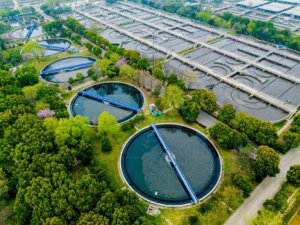
While there will always be variations depending on a plant’s size and design, as a general rule, wastewater treatment typically follows a few main stages, with each stage being essential in the removal of harmful contaminants.
Primary Treatment: Removing Solids
To begin, primary settlement tanks slow wastewater down, allowing for the removal of heavier suspended solids. These may include paper, fats, grit and organic debris, which will settle as sludge at the bottom of the tank. Grease and oils will rise to the top of the tank and be skimmed away.
Once the water is released to the secondary stage, the sludge may be removed and repurposed as a fertiliser; however, this requires processes including de-watering to stabilise the matter. Often, incineration is the preferred method for disposing of contaminated sludge properly.
This stage will remove around 60-70% of suspended solids from wastewater systems, working to reduce BOD by minimising the amount of organic materials in the water.
Secondary Treatment: Breaking Down Organic Matter
Now partially clarified, the water enters a biological treatment zone, where microorganisms break down organic pollutants and nutrients.
Packaged sewage treatment plants, such as RBCs and NuDisc®, achieve this by partially submerging discs that slowly rotate, exposing attached bacteria to oxygen and wastewater in turn.
In systems like the NuDisc®, this stage may also include an anoxic zone for denitrification, which converts nitrates into nitrogen gas.
Tertiary Treatment: Polishing and Nutrient Removal
If the watercourse is particularly sensitive, some treatment plants will include a tertiary treatment stage to further clean effluent.
This could involve:
- Physical-biological filters to remove fine suspended solids
- Chemical dosing to precipitate and remove phosphorus
- UV disinfection systems to destroy remaining pathogens
In modern plants, tertiary treatment may also target emerging contaminants, such as microplastics, pharmaceutical residues, and trace metals.
Where Does Treated Effluent Go?
Once wastewater has passed through the primary, secondary, and tertiary treatment stages, it’s referred to as final effluent — clean enough to be safely released back into the environment or reused for specific non-potable applications.
In UK treatment plants, the final effluent is either:
- Discharged into a nearby watercourse (like a river or stream) under a strict Environment Agency permit.
- Discharged into a soakaway or drainage field, where it safely filters through the soil.
- Reused onsite for non-drinking purposes like toilet flushing, irrigation, or process water, especially where a UV disinfection unit has been fitted.
Sensitive locations typically require stricter consent standards, so final effluent may undergo additional treatments, such as UV light disinfection or phosphorus removal, before being permitted to discharge.
FAQ: Wastewater Treatment Explained
Where does sewage go?
Once sewage and waste leave your property, they either enter the public sewer network or flow directly to an on-site treatment plant, where they undergo the stages above before being safely discharged back into the environment or a drainage field.
What is a Rotating Biological Contactor (RBC)?
An RBC is a type of biological treatment process used in wastewater plants that is low in energy use. Bacterial discs slowly rotate within the wastewater, breaking down organic matter and ammonia.
Can wastewater be reused?
Yes — if treated adequately by efficient systems, effluent may be reused in non-potable applications such as toilet flushing or irrigation. A tertiary treatment stage with UV disinfection is typically required to make effluent safe for reuse.
Do I need a permit to discharge treated wastewater?
Yes. In the UK, any discharge to a watercourse, groundwater, or drainage field must comply with the Environment Agency’s permit conditions or the relevant General Binding Rules for small discharges.
The General Binding Rules are as follows;
The General Binding Rules are a set of legal requirements in England for small sewage discharges from septic tanks and small sewage treatment plants to surface water or groundwater. They apply to systems that treat domestic sewage from up to 13 people and discharge less than two cubic metres (2,000 litres) per day.
As long as your system meets the following rules, there’s no need for you to have an environmental permit.
- Correct installation and regular maintenance.
- Discharge is to a watercourse (if using a treatment plant, not a septic tank) or a properly designed drainage field (not to soakaway crates or storm drains).
- No pollution is caused to the environment or human health.
- A registered waste carrier does desludging.
- You replace or upgrade any non-compliant systems (like old septic tanks discharging to watercourses).
If you can’t comply with any of these conditions, you must apply for a bespoke Environment Agency discharge permit.
When it comes to understanding how a wastewater treatment plant works, knowing the finer details allows facility operators and property owners to make informed decisions about their systems’ performance and legal responsibilities. From removing harmful matter to safely discharging effluent, each stage plays a vital role in protecting public health and the environment.
Whether you manage a small off-grid property, a rural business, or a commercial site, maintaining a compliant and efficiently operating system is essential. At KEE Services, we specialise in the design, installation, servicing, and maintenance of sewage treatment plants, offering a comprehensive range of services from routine maintenance to emergency repairs and consultancy.
Contact our technicians today for expert advice, a servicing quote, or support with your discharge permit application.